

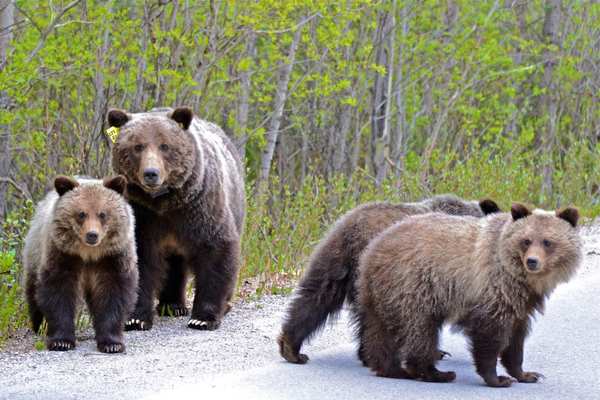
Seeing a bear on a trail is uncommon for many hikers, but the possibility changes how you should prepare in parts of the United States. Good bear safety while hiking is less about dramatic last-second reactions and more about preventing surprise encounters, managing food and scents, staying alert, and knowing the rules for the specific place you are visiting.
Bear behavior, regulations, and recommended precautions vary by region, park, and species. Local information should always be part of your trip planning.
Prevent Surprise Encounters Before They Start
Most hikers should focus first on avoiding close, unexpected encounters. Bears generally prefer to avoid people, but a bear may react defensively if surprised at close range, protecting cubs, or guarding food such as a carcass.
When hiking in bear country, stay aware of what is ahead. Make your presence known, especially near blind corners, dense vegetation, berry patches, streams, or places where visibility is poor or natural noise may prevent a bear from hearing you. Hiking with other people when possible also makes a group easier for wildlife to detect.
Headphones can reduce your ability to notice movement, warning sounds, or other hikers reporting wildlife ahead. Bear awareness works best when you can hear and see what is happening around you.
Read the Trail, Not Just the Map
Tracks, scat, claw marks, freshly disturbed ground, and feeding activity can indicate recent bear use. A carcass deserves particular caution because a bear may be nearby even if you cannot see it. If you notice a dead animal, strong odor of decay, or concentrated scavenger activity, give the area a wide berth rather than investigating.
Related trip-planning topics include backcountry wildlife awareness and trail emergency planning.
Manage Food, Trash, and Scented Items Correctly
Food management is a central part of wildlife hiking safety. Bears can be attracted to far more than an open sandwich. Trash, food wrappers, toothpaste, cosmetics, sunscreen, bug repellent, cooking equipment, and other scented items may all require secure storage depending on local rules.
Never intentionally feed a bear, and do not leave food scraps behind. On day hikes, keep food controlled and pack out every wrapper and leftover. For overnight trips, check the land manager’s food-storage requirements before leaving home. Some areas require approved bear-resistant containers or lockers, while others may allow specific food-hanging methods.
Carry Bear Spray Where It Can Be Reached Quickly
In many areas with bears, land-management agencies recommend carrying EPA-approved bear spray. Where it is recommended and legal, keep it in an accessible holster rather than buried inside a backpack. Learn how to remove the safety and deploy the canister before reaching the trail.
Bear spray is a defensive tool, not a scent repellent. Do not spray it on clothing, tents, backpacks, or people. Wind, weather, distance, and the individual product can affect how it behaves, so follow the manufacturer’s instructions and current local guidance. Some parks or jurisdictions may have different rules regarding bear spray.
What to Do If You See a Bear
If you spot a bear at a distance and it has not noticed you, do not approach it for a better view or photograph. Give it space and change your route if necessary. If the bear is aware of you, remain calm, speak in a steady voice so it can identify you as a person, and slowly back away while leaving it an escape route.
Do not run. Running can trigger a chase response, and a person cannot outrun a bear. Keep your pack with you rather than throwing food or equipment toward the animal as a distraction.
If a Bear Approaches or Charges
A charge does not automatically mean physical contact will occur, but it is serious. Stand your ground rather than running and prepare to use bear spray if the bear continues to charge and comes within the effective range described by the product and local guidance.
Bear encounter safety becomes more species- and behavior-specific if an attack occurs. National Park Service guidance generally advises fighting back during a black bear attack. For a defensive brown or grizzly bear attack, the usual guidance is to play dead, protecting the head and neck, unless the attack persists. If any bear appears to be stalking you as prey, attacks inside a tent, or continues a prolonged predatory attack, fight back vigorously. Learn the official advice for the species present at your destination before the trip.
A Practical Trail Scenario
Imagine two hikers approaching a noisy creek where brush blocks the view around a bend. Instead of walking silently into the blind section, they begin talking loudly enough to announce their presence. A bear appears farther along the trail and looks toward them. They stop, keep their packs on, speak calmly, and back away without running. Rather than trying to squeeze past the bear, they turn around and give it the trail.
That decision illustrates the best pattern for hiking in bear country: notice risk early, avoid escalation, and prioritize distance over completing the planned route.
Check Local Rules Before Every Trip
Bear country is not governed by one universal set of trail rules. Required wildlife distances, temporary closures, food-storage methods, bear-spray recommendations, and reporting procedures can differ between national parks, forests, state lands, and other recreation areas.
Before leaving, check the official website or ranger information for your exact destination. Recent bear activity may also result in trail closures or special restrictions. Another useful planning topic is adventure travel safety for remote trails with limited cell service.
Frequently Asked Questions
Should I make noise the entire time I am hiking?
You do not need to shout continuously, but making your presence known is especially useful in areas with poor visibility, near loud water, around blind corners, and anywhere a bear could be surprised at close range.
Should I run if a bear comes toward me?
No. Current National Park Service guidance says not to run from a bear. Stay calm, speak in a steady voice, back away slowly when appropriate, and be ready to follow species- and situation-specific guidance if the encounter escalates.
Is bear spray the same as ordinary pepper spray?
No. Bear spray is specifically designed for use against aggressive bears. Use an EPA-approved product intended for bears, carry it where it is quickly accessible, and follow both the label and local regulations.
Do I need a bear canister on every hike?
No. Food-storage requirements depend on the location and type of trip. Some backcountry areas require approved bear-resistant containers, while others use lockers or different approved methods. Check the rules for your destination before packing.
Make Prevention Your Main Safety Tool
The strongest bear safety habits happen well before a close encounter: stay alert, make noise where surprise is likely, keep food and scented items secure, carry appropriate defensive equipment where recommended, and give wildlife room to move. If you see a bear, staying calm and avoiding sudden escalation is usually more useful than trying to outmaneuver it.
Treat local guidance as part of your route planning. Knowing which bears live in the area, how food must be stored, and what officials currently recommend gives you a clearer plan before your boots reach the trail.