

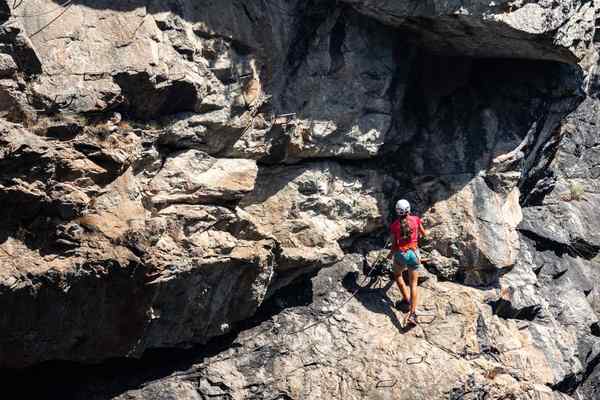
A via ferrata can feel like the missing step between a mountain hike and technical rock climbing. Instead of following a trail entirely on foot, you move across exposed rock using a fixed steel cable, iron rungs, steps, ladders, and sometimes suspension or wire bridges.
For travelers researching via ferrata in the USA, there is no single national standard for how a route operates. Some are guided commercial experiences, while others allow independent users who meet equipment and route rules. Difficulty, exposure, altitude, weather, access, and guide requirements can differ dramatically, so preparation starts with the specific route.
What a Via Ferrata Route Feels Like
The phrase via ferrata means “iron way,” and the description is literal. On many routes, you hike between rock sections and clip into a steel cable before traversing or climbing exposed terrain. Your hands may use natural rock, metal rungs, or both.
That makes fixed cable climbing different from hiking and conventional rock climbing. The movement is often simpler than technical climbing, but the exposure can be more psychologically demanding.
Via ferrata routes USA travelers encounter vary widely. The Ouray Via Ferrata in Colorado includes cable bridges, climbing rungs, foot pedals, natural holds, and horizontal and vertical cable sections. NROCKS in West Virginia is a guided experience combining climbing with long exposed sections and a high suspension bridge. Telluride’s route is known for major exposure above its box canyon.
How the Safety System Works
A typical setup includes a climbing harness, mountaineering helmet, and energy-absorbing via ferrata lanyard with two connector arms. The steel cable is divided by anchors. At an anchor, you transfer one carabiner to the next cable section and then the other so you maintain a connection during the transition.
Petzl’s guidance emphasizes staying tethered to the cable and managing cable sections correctly. A standard climbing sling or ordinary personal anchor is not a substitute for a certified energy-absorbing via ferrata system. Falls can create very high forces because a climber may fall past an anchor before the system catches them.
Before starting, check that the helmet is secured, the harness is snug and correctly fastened, the lanyard is properly attached, and the carabiners function correctly. If the equipment is unfamiliar, a guided via ferrata is a sensible introduction because the first lesson should happen on the ground.
Do You Need a Guide?
Guide rules depend on location. NROCKS requires an approved guide. Ouray allows qualified independent users who follow its equipment and operating rules, while advising inexperienced climbers to hire a professional. Telluride’s visitor information also strongly recommends using a guide.
Even where a guide is optional, hiring one can help if you have never used a via ferrata lanyard, do not know how you respond to exposure, are traveling with less-confident partners, or want help judging pacing and weather. Treat “guide optional” as an access rule, not proof that a route is beginner-friendly.
How Fit Do You Need to Be?
You do not need advanced rock-climbing technique for many recreational routes, but fitness matters. Expect several hours of movement, repeated stepping onto rungs, pulling for balance, hiking approaches, and maintaining concentration while exposed. Lower-body endurance is useful because efficient climbers push with their legs instead of hanging on their arms. On unfamiliar routes, the mental workload also matters: you are reading the terrain, managing carabiners, watching spacing, and choosing foot placements at the same time. Slow, deliberate movement usually conserves more energy than trying to move quickly.
Prepare with brisk uphill walking or stair climbing, step-ups, bodyweight squats, and some pulling or grip work. Adventure climbing becomes harder when someone rushes the first half and reaches the most exposed section with tired arms.
Related internal topics worth exploring include beginner climbing safety, hiking fitness for mountain trips, and what to pack for an adventure travel day.
Exposure Is Often the Real Test
A traverse can be technically easy and still feel intense when the valley floor is far below.
Imagine reaching a horizontal traverse where the cable is at chest height and your feet are on spaced metal rungs. You can see open space below your heels. Do not stare down or rush. Keep deliberate contact with the route, breathe normally, look toward the next stable position, and move one clip at a time. If heights trigger panic rather than manageable nerves, choose an introductory route or guided outing first.
Weather Can Change the Experience
Via ferrata routes are highly exposed to weather. Wet rock reduces traction, cold rain makes hardware harder to handle, strong wind can make bridges intimidating, and thunderstorms are a serious concern around exposed metal infrastructure and high terrain.
Check the route operator or land manager for closures, then review the local forecast for the route’s elevation. Start early when afternoon storms are common. Carry water, food, a light insulating layer, sun protection, and rain protection. If thunder is developing or the route authority closes access, changing plans is good mountain judgment.
What to Check Before You Go
Confirm current operating rules directly with the route manager or guide service. Check whether reservations are required, whether independent climbing is allowed, what equipment standard is accepted, whether rentals are available, and whether age, weight, height, or reach limits apply.
Also check outing time, approach distance, elevation gain, bail-out points, seasonal opening dates, and whether the route is one-way. These details matter more than a generic difficulty label. A route described as moderate may still be a poor choice for someone uncomfortable with sustained exposure or not acclimatized to altitude.
FAQ
Is via ferrata safer than rock climbing?
It is better viewed as a different activity with its own risks. Fixed cables and engineered hardware provide structured protection, but falls can still be serious. Correct equipment, clipping technique, spacing, route judgment, and weather decisions all matter.
Can beginners do a via ferrata in the USA?
Yes, many routes and guided programs suit first-timers, but “beginner” varies by location. Choose a route matching your fitness and comfort with heights, and use a professional guide when you are unfamiliar with the system or the route recommends one.
What shoes should you wear?
Wear secure footwear with good traction. Approach shoes or sturdy hiking shoes are common choices. Avoid loose casual footwear because you need confident foot placement on rock, metal rungs, and uneven approaches.
Do you need climbing experience?
Not always. Many guided experiences are designed for people without technical climbing backgrounds. You still need to learn the equipment system, follow instructions precisely, and have enough fitness and composure for the route.
Prepare for the Route, Not Just the Photos
Via ferrata gives hikers access to steep, exposed mountain terrain without requiring the full skill set of traditional rock climbing. That accessibility should not be confused with casual sightseeing. The best experience comes from matching the route to your fitness, understanding local rules, using proper equipment, checking the weather, and being realistic about your response to heights.
Do those things well and a via ferrata becomes more than an adrenaline stop. It becomes a focused mountain experience: part hike, part climb, and part exercise in staying calm while the landscape opens beneath your feet.