

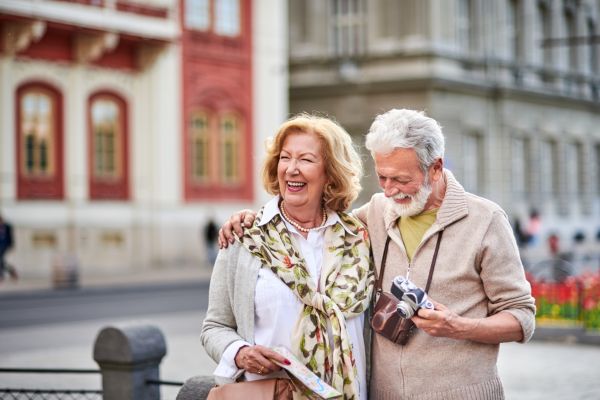
Travel stories often begin with youth. A student boards a train with a backpack, a young couple drives across a continent, or a recent graduate takes a year to explore the world. Yet some of the most thoughtful, surprising, and memorable journeys belong to people who begin traveling more deeply later in life.
Senior travelers bring something different to the road. They carry decades of memories, a stronger sense of perspective, and usually less interest in rushing through a checklist of famous landmarks. Their journeys are not about proving how far they can go. They are often about curiosity, connection, and finally making time for places that once existed only in books, films, or conversations.
Senior travelers’ tales reveal that global adventure does not have an expiration date. In fact, age can make travel richer, more deliberate, and far more meaningful.
The Journey That Waited for Retirement
For many older travelers, the dream of seeing the world has been quietly waiting for years.
Careers, children, mortgages, and family responsibilities often shape the middle decades of life. Travel may happen, but it is usually limited to short holidays planned around work schedules and school calendars. Retirement changes that rhythm. Suddenly, a journey does not have to fit inside seven hurried days.
Consider the retired teacher who had spent years showing students photographs of ancient Greece but had never walked through Athens herself. When she finally stood beneath the columns of the Parthenon, the experience felt less like sightseeing and more like completing a conversation that had begun decades earlier.
She did not hurry through the ruins. She sat on a low stone wall, watched the light move across the city, and listened to several tour guides telling different versions of the same history. Her patience allowed the place to become more than a photograph.
That slower approach appears in many senior travelers’ tales. Older explorers often understand that a destination cannot be fully experienced by racing from one attraction to another. They are more willing to pause, observe, and let a place reveal itself gradually.
Discovering Adventure Beyond Physical Challenges
Adventure is sometimes described in dramatic terms: climbing mountains, crossing deserts, or diving into deep water. Those experiences can be exciting, but adventure can also be quieter.
For a senior traveler, navigating a busy railway station in Tokyo may feel adventurous. Ordering food in a small village without sharing a common language can become a memorable challenge. Taking a local ferry instead of a tourist boat may lead to an unexpected afternoon among commuters, schoolchildren, and market traders.
One older couple traveling through Vietnam planned to spend two nights in a riverside town. Heavy rain delayed their onward journey, forcing them to stay nearly a week. At first, the disruption felt frustrating. Then the hotel owner invited them to join a family meal.
Over several evenings, they exchanged stories through gestures, translated phrases, and laughter. They learned how to prepare a regional dish, helped a child practice English, and attended a small neighborhood celebration. Years later, they remembered almost nothing about the delayed bus. They remembered the family.
Such stories remind us that adventure is not always found by seeking danger. Sometimes it appears when plans fall apart and travelers remain open to what comes next.
Traveling With a Lifetime of Perspective
Age changes the way people interpret what they see.
A younger traveler might admire the architecture of an old European city. A senior traveler may notice how that architecture reflects war, migration, changing governments, or economic hardship. Personal memories create connections between a destination’s history and the events a traveler has witnessed during their own lifetime.
A man visiting Berlin in his seventies remembered seeing images of the divided city on television when he was young. Walking along the remaining sections of the Berlin Wall felt deeply personal, even though he had never lived in Germany.
He recalled the fear surrounding the Cold War, the conversations adults had around the dinner table, and the surprise of watching the wall fall decades later. The visit connected global history with private memory.
This is one reason senior travelers’ tales often contain thoughtful reflections rather than simple descriptions. Older travelers understand that places change. They have watched borders shift, cities expand, technologies transform daily life, and communities rebuild after conflict.
Travel allows them to see those changes up close.
New Friendships in Unexpected Places
One of the quiet gifts of travel later in life is the chance to form friendships outside familiar social circles.
At home, routines can become predictable. People see the same neighbors, visit the same shops, and speak with relatives or longtime friends. Travel interrupts that pattern.
On a train through the Canadian Rockies, a retired nurse began talking with another passenger who was sketching the mountains. The conversation moved from art to family, then to grief and new beginnings. Both women had lost their spouses within the previous few years.
They spent the rest of the journey sharing meals and exploring stops together. What began as a casual conversation became a friendship that continued long after the trip ended.
Older travelers may be especially willing to have these honest exchanges. There is often less pressure to impress strangers and more confidence in speaking openly. A conversation at breakfast or on a bus can quickly move beyond small talk.
The friendships may last for a day, a week, or many years. Their length matters less than their impact.
Learning to Accept a Different Pace
Travel in later life may require practical adjustments. Long walks can be tiring. Early flights may feel less appealing. Recovery from a busy day can take longer than it once did.
Accepting these realities is not the same as giving up adventure. It simply means designing a journey that allows enjoyment instead of exhaustion.
Many senior travelers choose longer stays in fewer locations. Rather than visiting six cities in ten days, they may spend a week in one neighborhood. This creates time for rest, but it also creates familiarity.
The café owner begins to recognize them. They learn which market opens early and which park is quiet in the evening. Streets that seemed confusing on the first day gradually become comfortable.
A slower pace can reveal details that rushed travelers miss: laundry hanging between balconies, musicians practicing behind open windows, old men playing cards in a square, or the changing smell of bakeries as morning becomes afternoon.
There is freedom in no longer trying to see everything.
Returning to Places From the Past
Some senior travelers do not seek entirely new destinations. They return to places they visited when they were young.
These journeys can be emotional because the traveler is not only comparing the past with the present. They are also comparing their younger self with the person they have become.
A woman who had traveled through Spain in her twenties returned more than forty years later. The small guesthouse where she once stayed was gone, replaced by an apartment building. The café where she had written postcards had become a clothing store.
At first, she felt disappointed. Then she found the public square where she had spent long evenings talking with other travelers. The trees were taller, the benches were newer, but the evening light was the same.
She sat there and remembered how uncertain she had once felt about her future. Returning as an older woman, she realized that the trip was not about recovering the past. It was about honoring it.
Places do not remain unchanged for us. Neither do we.
Family Journeys Across Generations
Travel can also bring older adults closer to children and grandchildren.
Multigenerational journeys are not always simple. Different energy levels, interests, and routines can create tension. Younger relatives may want packed schedules, while older family members prefer time to rest. Still, shared travel can create stories that become part of a family’s identity.
A grandfather traveling with his teenage grandson may discover that conversation feels easier while walking beside a river than it does across a dining table. A grandmother may share family history while visiting the town where her parents were born.
Younger travelers provide help with technology, navigation, or heavy luggage. Older travelers offer patience, context, and stories that might otherwise remain untold.
These journeys allow each generation to see the other differently. Grandparents become explorers rather than simply family elders. Teenagers become capable companions rather than children who need constant guidance.
Courage Does Not Disappear With Age
Travel later in life often requires a quiet kind of courage.
It can mean taking a first solo trip after losing a partner. It can mean boarding a plane after years of caring for someone else. It can mean trusting an unfamiliar transport system, asking strangers for help, or accepting that not everything will go according to plan.
The courage may not be visible in photographs, but it is present in the decision to leave home.
Senior travelers often know more clearly than younger people that time is limited. This awareness can create fear, but it can also create determination. They understand that postponing every dream may eventually mean losing the chance to pursue it.
Their journeys are not attempts to escape age. They are expressions of being fully alive within it.
The Stories That Return Home
The value of travel is not limited to the days spent away.
Travelers return with changed routines, fresh confidence, and a wider sense of what is possible. They may become more curious about international news, more willing to try unfamiliar food, or more comfortable speaking with people from different backgrounds.
Most importantly, they return with stories.
Senior travelers’ tales are filled with missed trains, generous strangers, unexpected weather, long conversations, peaceful mornings, and moments of wonder. These stories challenge the assumption that exploration belongs mainly to the young.
A passport does not ask how old a traveler feels. A road does not care how many birthdays someone has celebrated. The world remains open to those who are willing to meet it with curiosity.
A Wider World at Every Age
Global adventure changes as people grow older, but it does not lose its meaning. It may become slower, more reflective, and less concerned with collecting destinations. That can make it even more rewarding.
Senior travelers often understand that the finest moments cannot be scheduled. They occur in conversations, delays, shared meals, familiar songs heard far from home, and quiet realizations beside unfamiliar landscapes.
Their tales remind us that travel is not a race against age. It is a way of continuing to learn, connect, and participate in the world.
There will always be another street to wander, another story to hear, and another horizon capable of making someone feel young in the best possible way.