

“`html
Yellowstone is one of those parks that looks manageable on a map and then completely humbles you once you’re actually inside it. It’s larger than Rhode Island, split across three states, and packed with enough geysers, canyons, and wildlife that a single day barely scratches the surface. The good news is that three days is genuinely enough to see the highlights properly, as long as your Yellowstone trip planning is focused rather than scattershot. This itinerary is built around the park’s five main regions, tackled in a logical loop so you’re not backtracking across hours of road for no reason.
Whether you’re chasing your first glimpse of a geyser eruption or hoping to spot wolves at dawn, here’s how to structure three days that actually work.
Before You Go: A Few Planning Basics
Yellowstone has five entrances, and where you start shapes your whole route. This itinerary assumes an entry from the west (West Yellowstone, Montana), which is the busiest but also the most convenient for reaching Old Faithful and the geyser basins quickly. If you’re entering from the north or east, the order below can be flipped without much trouble.
Distances inside the park are deceptive. A 20-mile drive can easily take 45 minutes once you factor in wildlife jams, construction, and the general chaos of bison deciding the road belongs to them. Build in more time than Google Maps suggests, and treat any traffic delay as part of the experience rather than an inconvenience.
Day 1: Geyser Country and Old Faithful
Morning: Upper Geyser Basin
Start early, both to beat the crowds and because wildlife tends to be more active in the cooler hours. The Upper Geyser Basin is home to the highest concentration of geysers on the planet, and it’s the natural centerpiece of any Old Faithful itinerary. Old Faithful itself erupts roughly every 60 to 110 minutes, so check the predicted times at the visitor center and plan the rest of your morning loop around it.
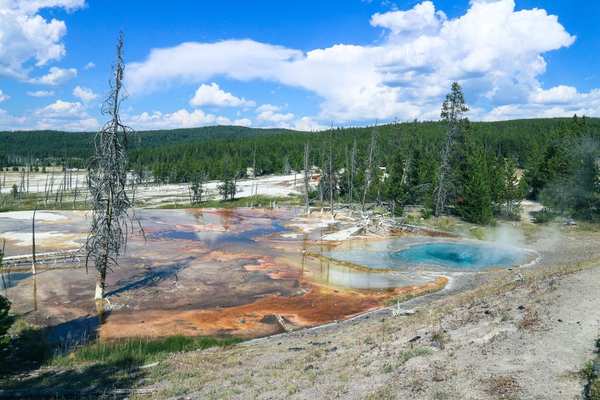
Beyond Old Faithful, the boardwalk trail through the basin passes Grand Geyser, Castle Geyser, and the strikingly colored Morning Glory Pool. Give this area a solid two to three hours if you want to see it properly rather than rushing through.
Afternoon: Midway and Lower Geyser Basins
A short drive north brings you to Midway Geyser Basin, home to the Grand Prismatic Spring — the park’s most photographed feature, and for good reason. Its rainbow coloring is best appreciated from the Fairy Falls overlook trail, a moderate 1.6-mile round trip that gives you an elevated view most visitors miss by staying on the boardwalk alone.
Evening: Old Faithful Area
Staying near Old Faithful on night one cuts down significantly on driving and puts you close to the action for an early start the next day. The Old Faithful Inn is a destination in itself if you can get a reservation, though lodges in West Yellowstone are a reliable, more available alternative.
Day 2: Canyon Country and Wildlife Watching
Morning: Grand Canyon of the Yellowstone
Drive northeast toward Canyon Village, where the Yellowstone River carved a canyon nearly 1,000 feet deep. Artist Point and Lookout Point both offer dramatic views of the Lower Falls, and the short walk between viewpoints is manageable for most fitness levels. Arrive early for softer light and thinner crowds.
Midday: Hayden Valley
Hayden Valley is arguably the best spot in the park for Yellowstone wildlife viewing, particularly around dawn and dusk. Bison herds are almost guaranteed here, and with patience — and a decent pair of binoculars — grizzly bears, elk, and even wolves are regularly spotted from the roadside. Resist the temptation to rush through; this is a place worth slowing down for.
Afternoon: Mammoth Hot Springs
Continue north to Mammoth Hot Springs, where terraced limestone formations create a landscape that looks almost otherworldly. It’s a different kind of geothermal feature from what you saw on day one, shaped by mineral deposits rather than geysers, and the boardwalks here are relatively short and easy.
Evening: Lamar Valley
If time and energy allow, a detour into Lamar Valley before sunset is one of the best wildlife-viewing opportunities in the entire park, often called America’s Serengeti for its concentration of large mammals. Wolves, pronghorn, and bison are frequently visible from pullouts along the road.
Day 3: Lake Country and the Return Loop
Morning: Yellowstone Lake
Head south toward Yellowstone Lake, the largest high-elevation lake in North America. The West Thumb Geyser Basin sits right on its shore, offering a smaller but still striking collection of hot springs and geysers with the lake as a backdrop — a nice contrast to the basins covered earlier in the trip.
Midday: A Final Hike
If you have energy left, the Storm Point Trail near Lake Village is a relatively easy 2.3-mile loop through forest and lakeshore, and it’s often quieter than the park’s more famous trails. It’s a good way to close out the trip with some solitude after two busy days.
Afternoon: Departure
Depending on your exit route, allow extra time on the way out for one last wildlife sighting or photo stop. Many visitors find the drive out is when the best, least crowded views appear, simply because everyone else is heading in.
Frequently Asked Questions
Is 3 days enough time for Yellowstone National Park?
Yes, three days is enough to cover the park’s major highlights, including Old Faithful, the Grand Canyon of the Yellowstone, and the best wildlife-viewing areas, as long as the itinerary is planned around the park’s main regions rather than random back-and-forth driving.
What is the best time of year to visit Yellowstone?
Late spring through early fall (May to September) offers the most reliable road access and wildlife activity, though summer brings the largest crowds. Late May and September tend to offer a good balance of good weather and thinner crowds.
Where should I stay for a 3-day Yellowstone trip?
Staying inside or near the park, such as around Old Faithful, West Yellowstone, or Canyon Village, cuts down significantly on daily driving time. Booking well in advance is essential, since in-park lodges fill up months ahead during peak season.
What’s the best time of day for Yellowstone wildlife viewing?
Early morning and early evening are consistently the best windows, particularly in Hayden Valley and Lamar Valley, when animals are most active and temperatures are cooler.
Final Thoughts
Three days won’t show you every corner of Yellowstone — nothing short of a lifetime really would — but this route covers the park’s defining features without leaving you exhausted from constant driving. Geysers on day one, canyons and wildlife on day two, and a quieter lakeside finish on day three make for a trip that feels complete rather than rushed. Plan ahead, book accommodation early, and leave a little room in the schedule for the moments you can’t plan for, since in Yellowstone, those are often the ones you remember most.
“`